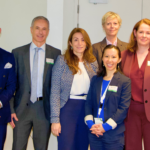
As Europe starts putting its latest sustainability policies into practice, it becomes increasingly clear that circularity can only succeed if the entire value chain moves forward together.
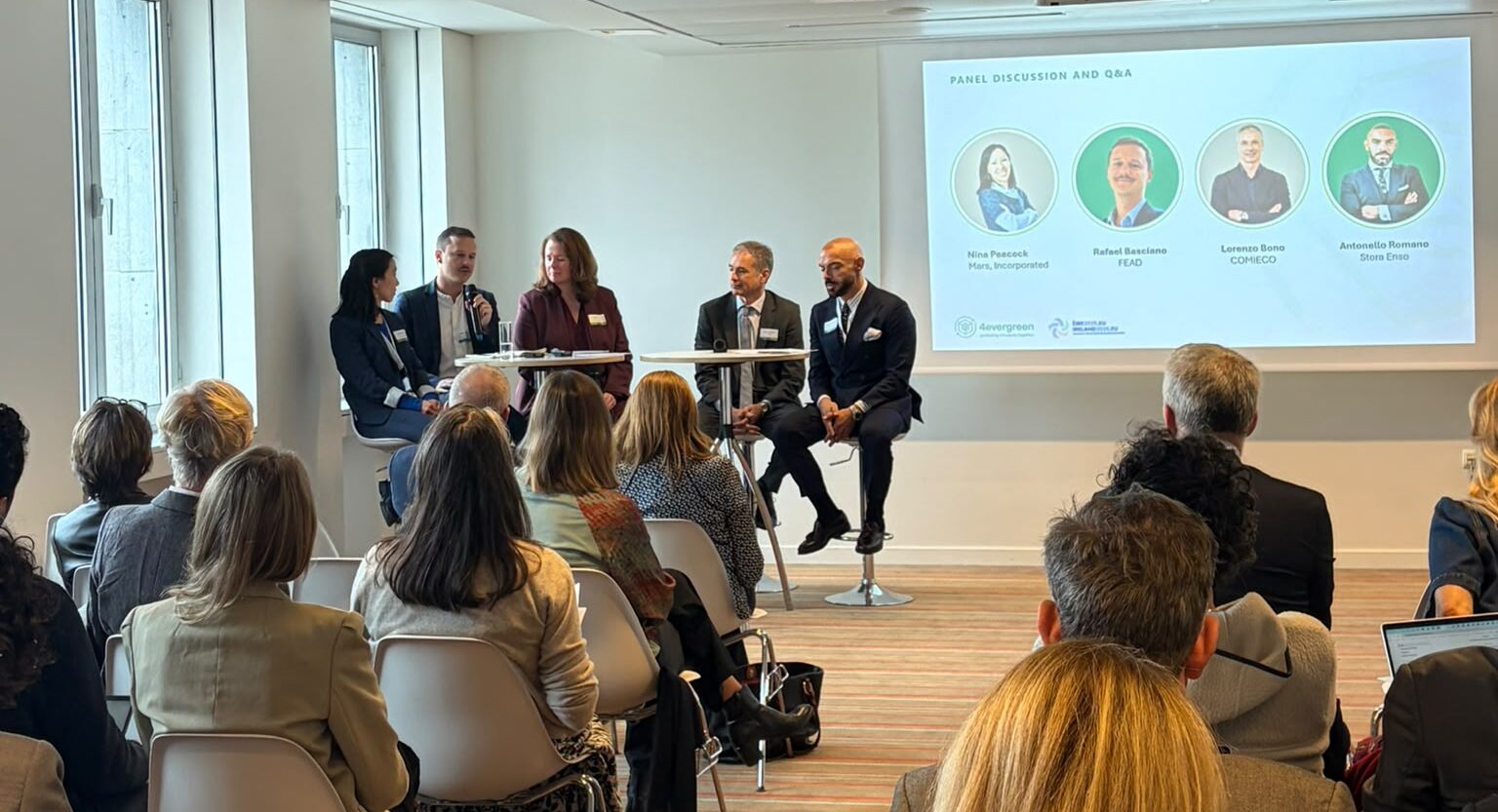
That was the central theme of 4evergreen’s event, Closing the Last Gap: Harmonised Design-for-Recycling Criteria and a Working Single Market for Recovered Paper Packaging, in association with the Irish Presidency of the Council of the EU. Taking place in Brussels on 21 October 2026, the panel discussion brought together policymakers, industry representatives, and technical experts to discuss the next phase of the Packaging & Packaging Waste Regulation (PPWR) implementation.
Across keynote speeches and panel discussions, speakers and the audience agreed that, as Europe develops harmonised design-for-recycling criteria and related implementing measures, a common, science-based approach will be essential to support high-quality recycling while safeguarding the functioning of the Single Market.
This includes:
- The need for a strong business case alongside sustainability ambitions.
- Greater regulatory harmonisation and consistent implementation across Member States.
- Better collection and sorting systems to keep valuable materials in circulation.
- Product design that supports circularity throughout the value chain.
Opening the event, Francesca Stevens, Director-General of Cepi, underlined the importance of a strong and harmonised Single Market to create the certainty needed for investment and innovation in recycling. This sentiment was then echoed by Emmanuelle Maire, Head of Unit for Bioeconomy and Sustainable Materials at the European Commission, who highlighted the crucial role of industry expertise in developing workable solutions for PPWR implementation; and acknowledged the contributions that the 4evergreen Alliance has made throughout the years towards circularity in the paper-based packaging industry.
The panel conversation that followed – featuring Rafael Basciano (FEAD – European Waste Management Association), Nina Peacock (Mars, Incorporated), Lorenzo Bono (COMIECO – National Consortium for the Recovery and Recycling of Cellulose-based Packaging of Italy), and Antonello Romano (Stora Enso) – reinforced that paper-based packaging already represents one of Europe’s strongest circular success stories. Effective collection, sorting, and recycling systems help keep valuable paper-based materials in circulation, but maintaining and improving this performance will require alignment across Member States and across the value chain.
Representing different parts of the paper-based packaging value chain, our panellists shared their perspectives on recyclability assessment, collection systems, design choices and future regulatory requirements. While approaches and priorities differed, there was broad agreement on the need for harmonised rules, common methodologies and greater predictability to accelerate progress towards circularity.
Many of these discussions build on the work already carried out within 4evergreen. Through its Toolbox, the Alliance provides stakeholders with science-based guidance, methodologies and practical recommendations covering the entire paper-based packaging value chain, helping organisations align around a common understanding of circularity and recyclability.
One of the most important takeaways, however, was the value of collaboration itself. Questions around recycling performance, design-for-recycling criteria, and market functioning cannot be solved in isolation. They require dialogue, expertise and a shared commitment to finding common ground. That’s where 4evergreen provides a unique forum for discussion, alignment, and co-creation of technical guidance for the industry, by the industry.
As Europe enters a crucial phase in PPWR implementation, we must continue creating the conditions for innovation, investment, and circularity to thrive. By continuing to connect the entire paper-based packaging value chain, 4evergreen is helping turn circular economy ambitions into practical, scalable solutions.
4evergreen would like to thank the speakers/panellists, our moderator Susan Brunner, and all participants for joining us at this important event. We encourage everyone to continue the discussion at our Annual Conference on 1 December, in Brussels, under the theme ‘’Shaping Circularity in Europe: From Policy Frameworks to Practical Solutions’’.